


Introduction
Maybe it is just me (Clay), but I have always had a hard time distinguishing 「阻む」 (to hinder; to prevent) and 「拒む」 (to refuse). The first is pronounced "habamu" and the second is "kobamu."
阻む
to hinder; to prevent; to block

拒む
to refuse; to reject

The two bamus!
Worse their meanings are similar and the pitch accent is the same haBAmu and koBAmu in standard Japanese.
While these are fairly intermediate level vocabulary words, I think even beginners should go through this deep dive with me. Japanese is chock full of these kind of similar but different words, and it is a good idea to start keeping the tricky ones in mind early on. Very often, the pronunciation is the same and the overall meaning is the same, but depending on the kanji, the usage is slightly different.
Let's start by examining the kanji.
Kanji
Use the mnemonic story below to remember the meaning.
阻
Kun: はば.む
On: ソ
thwart; separate from; prevent; obstruct; deter; impede
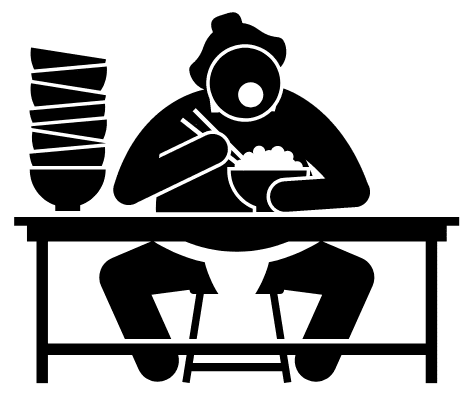
A mound 阝 of food on a sideways plate 皿 prevents me from losing weight.
拒
Kun: こば.む
On: キョ、 ゴ
repel; refuse; reject; decline
A HUGE 巨 hand 扌 sticks out meaning rejection.

Keeping in mind these two mnemonic stories will help separate them:
- 阻 A mound of food on a sideways plate prevents me from losing weight.
- 拒 He stuck out a HUGE hand to decline the offer
Main Meaning
This may be an oversimplification, but 阻む involves an act to stop or hinder the action of someone or something.
拒む, on the other hand, involves a decision (to refuse an act). The person chooses to reject something.
- 阻む to keep someone from doing; to stop; to prevent; to check; to hinder; to obstruct; to oppose; to thwart
- 拒む to refuse; to reject; to decline
Example Sentences
阻む to keep someone from doing
彼らは大きな川に前進を阻まれた。
Their progress was stopped by a wide river.
Vocabulary & Notes
拒む to refuse; to reject; to decline
彼女は彼らが求めたことを拒んだ。
She refused to do what they asked.
Vocabulary & Notes
Example Words
Let's learn a few useful vocabulary words with the kanji.
阻 Words
Remember: 阻 means "to hinder" or "to impede" [mound of food on a plate hinders my diet]
阻止
obstruction; check; hindrance; prevention; impediment; interdiction; preemption; blocking [阻 (hinder) + 止 (stop)]
阻害
obstruction; impediment; hindrance; inhibition; blocking; check [阻 (hinder) + 害 (harm)]
拒 Words
Remember: 拒 means "to refuse" or "to reject" [A huge hand refuses the offer]
拒否
refusal; rejection; denial; veto [拒 (refuse) + 否 (no)]
拒絶
refusal; rejection [拒 (refuse) + 絶 (sever)]