

~ます
ABOUT:
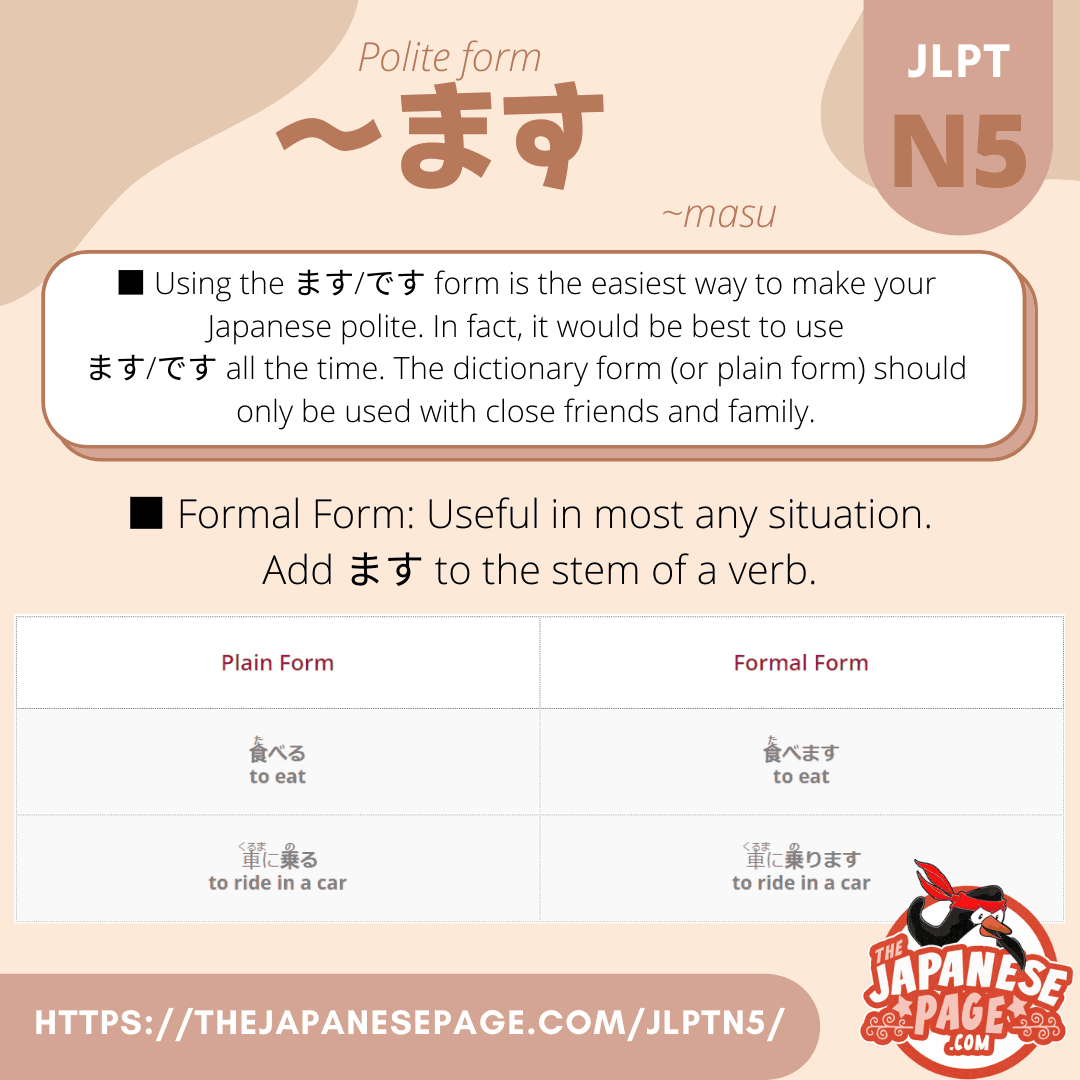
■ Using the ます/です form is the easiest way to make your Japanese polite. In fact, it would be best to use
ます/です all the time. The dictionary form (or plain form) should only be used with close friends and family.
Study Notes:
■ Formal Form: Useful in most any situation. Add ます to the stem of a verb.
Plain Form | Formal Form |
|---|---|
食べる | 食べます |
車に乗る | 車に乗ります |
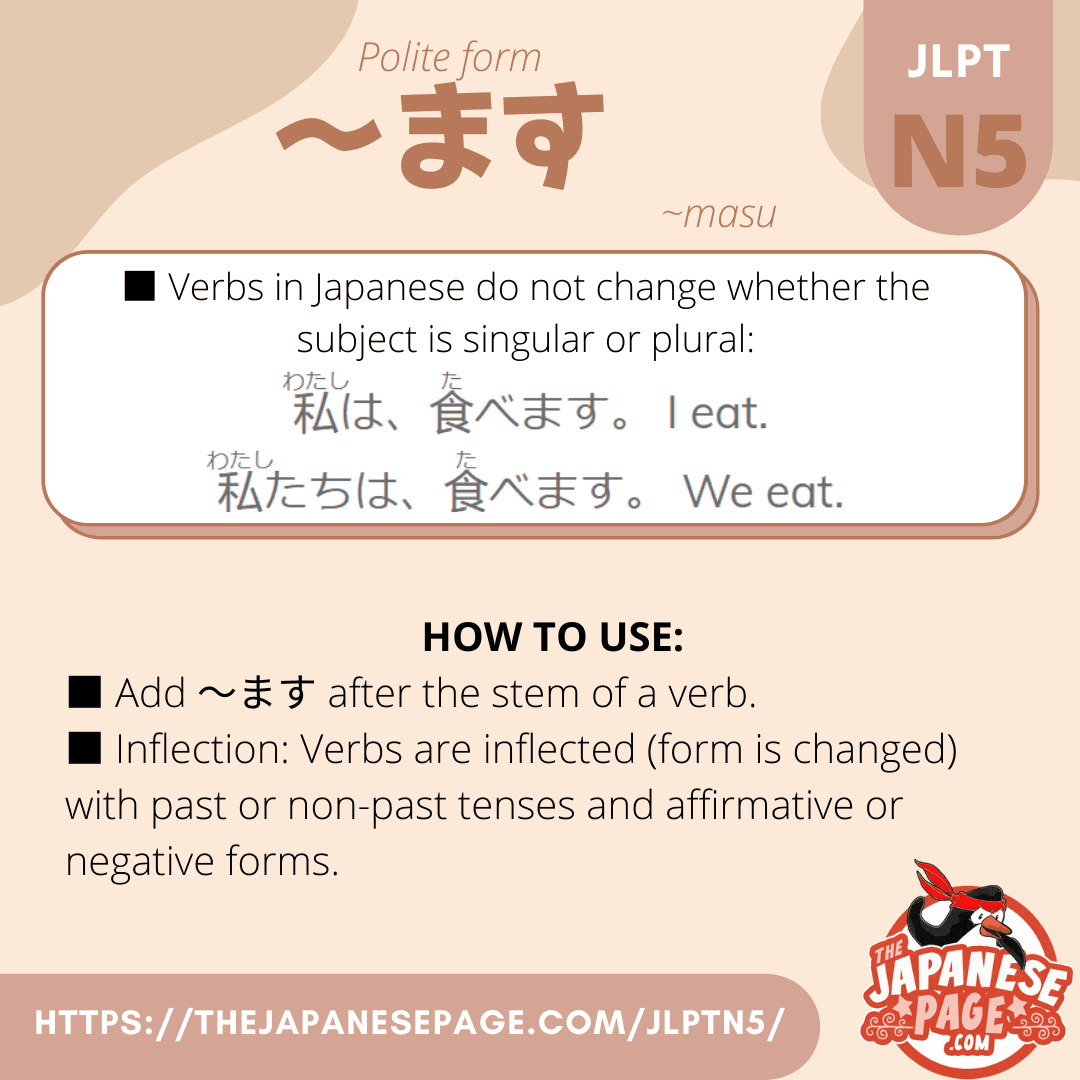
■ Verbs in Japanese do not change whether the subject is singular or plural:
私は、食べます。 I eat.
私たちは、食べます。 We eat.
How to Use:
■ Add ~ます after the stem of a verb.
■ Inflection: Verbs are inflected (form is changed) with past or non-past tenses and affirmative or negative forms.
Examples:
食べる to eat (plain form)
-> 食べます to eat (formal form)
車に乗る to ride in a car (plain form)
-> 車に乗ります to ride in a car (formal form)