

ABOUT:
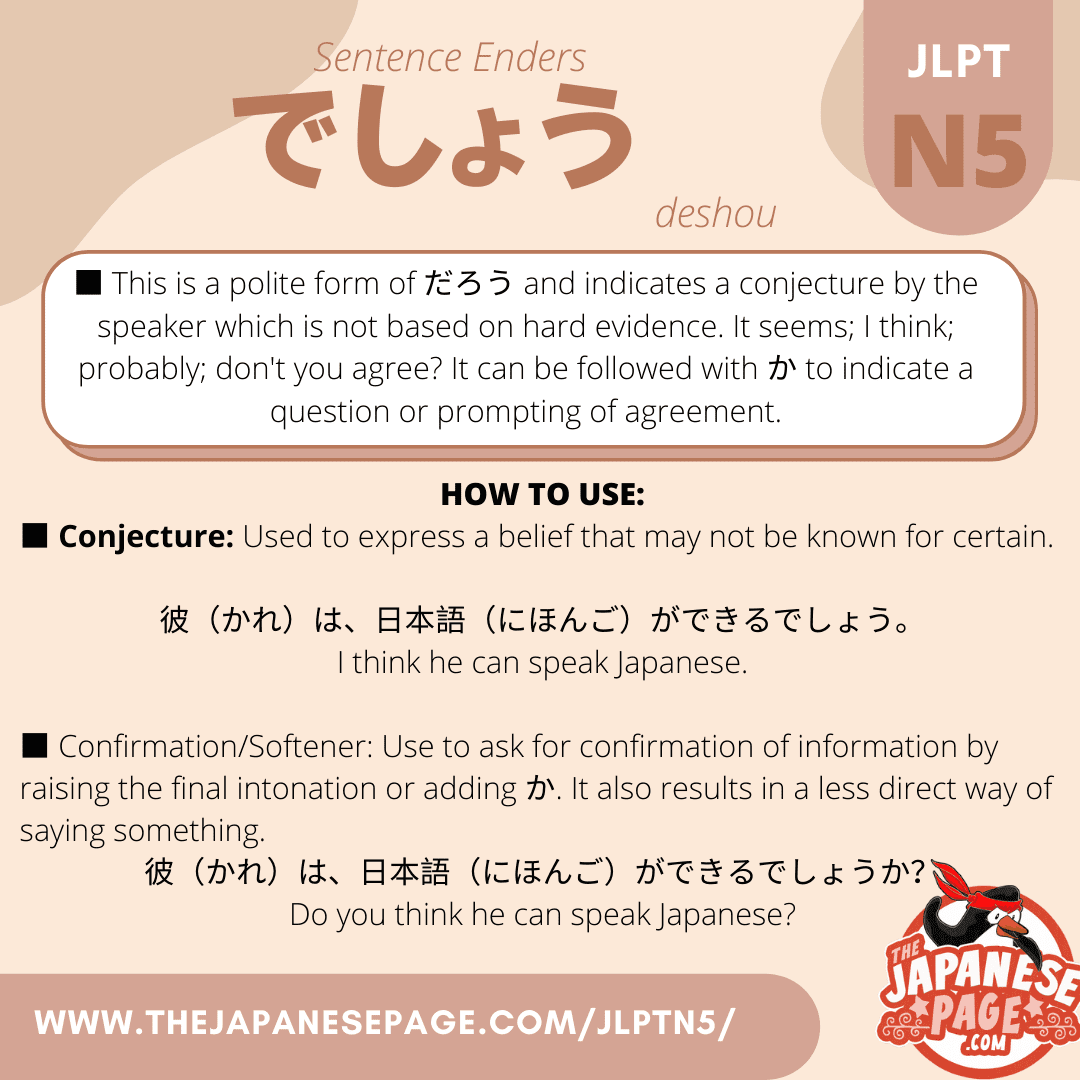
■ This is a polite form of だろう and indicates a conjecture by the speaker which is not based on hard evidence. It seems; I think; probably; don't you agree? It can be followed with か to indicate a question or prompting of agreement.
HOW to use:
■ Conjecture: Used to express a belief that may not be known for certain.
彼は、日本語ができるでしょう。
I think he can speak Japanese.
■ Confirmation/Softener: Use to ask for confirmation of information by raising the final intonation or adding か. It also results in a less direct way of saying something.
彼は、日本語ができるでしょうか?
Do you think he can speak Japanese?
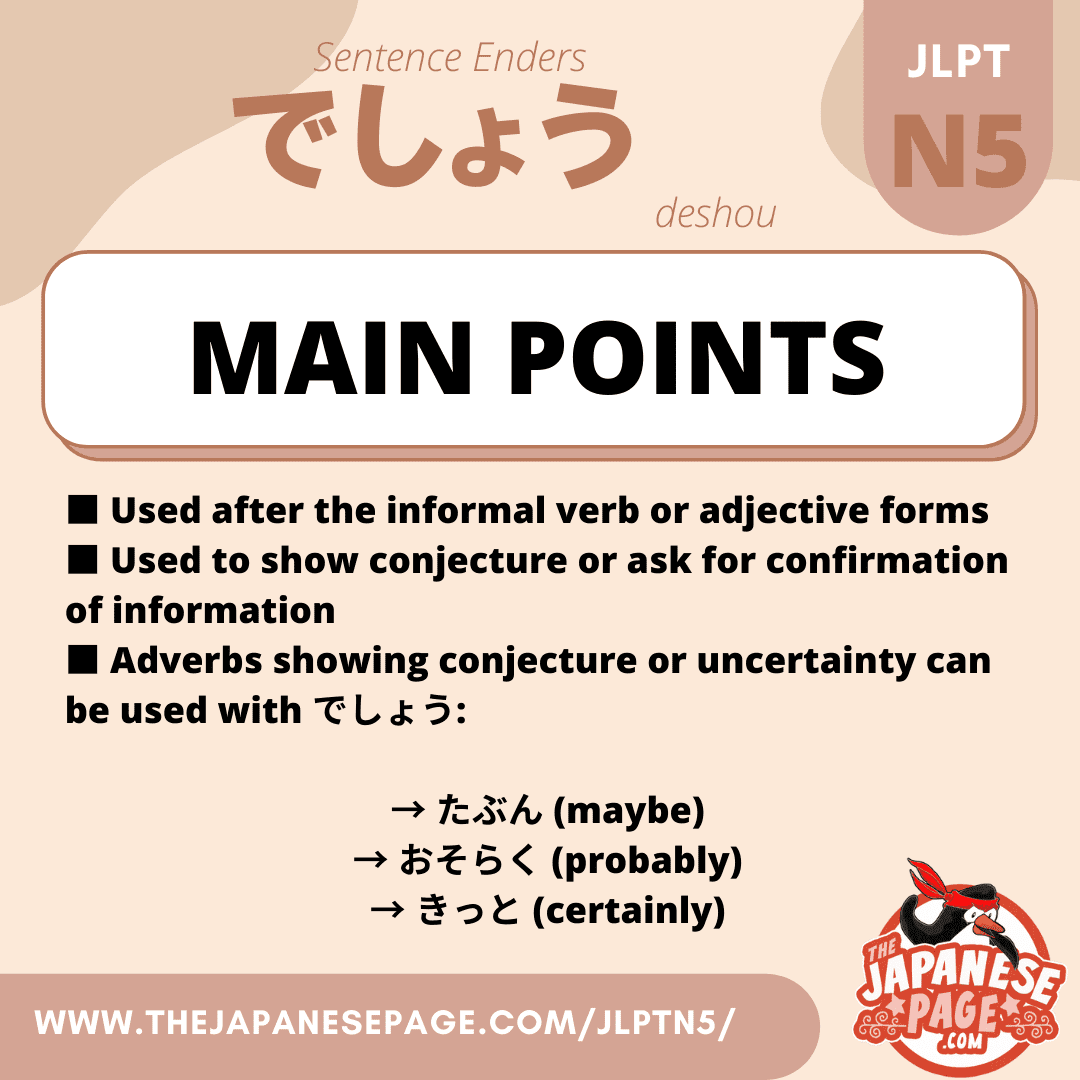
MAIN POINTS:
■ Used after the informal verb or adjective forms
■ Used to show conjecture or ask for confirmation of information
■ Adverbs showing conjecture or uncertainty can be used with でしょう:
→ たぶん (maybe)
→ おそらく (probably)
→ きっと (certainly)