0 Comments

October 11, 2021

Using こと in Japanese – どういうこと?

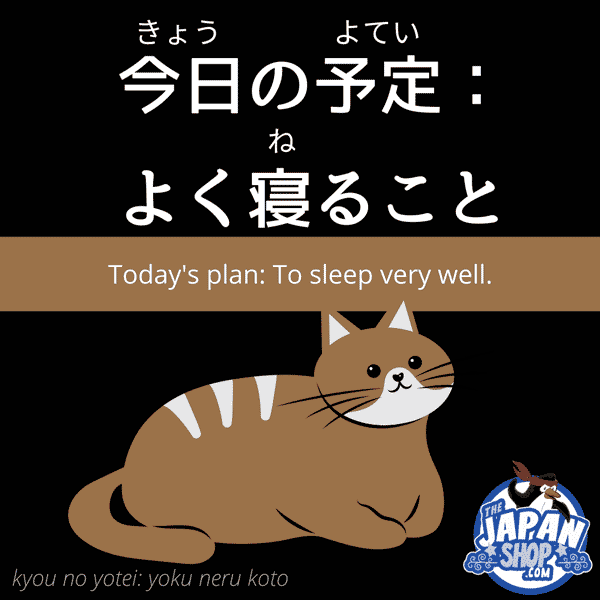
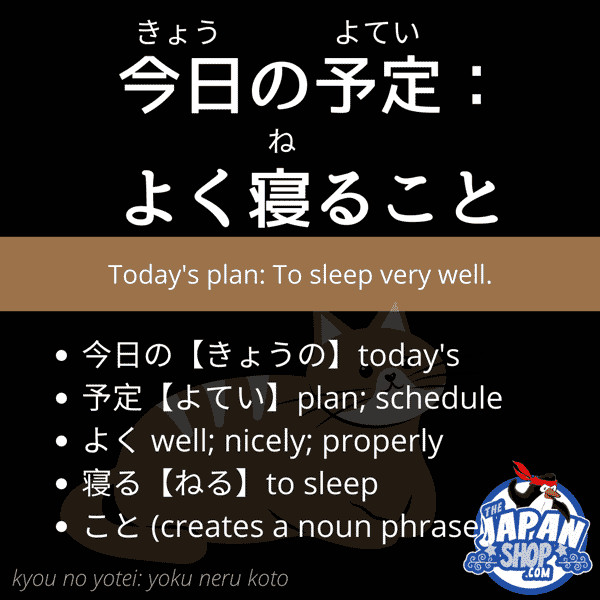
今日(きょう)予定(よてい):よく()こと

Today's plan: To sleep very well.

Vocabulary:

  • 今日の【きょうの】today's
  • 予定【よてい】plan; schedule
  • よく well; nicely; properly
  • 寝る【ねる】to sleep
  • こと (creates a noun phrase)
  • *Note: in this case, こと is optional. A more literal translation might be "sleeping well" where the noun ending -ing corresponds with こと .


    Is こと confusing for you? 

    If so, you aren't alone. こと isn't a concrete, easy-to-understand word. But by learning the following two usages, we should be able to clear up some of the confusion.


    Using こと

    As mentioned previously, こと has two main usages. After explaining those with examples, we'll look at a few idiomatic phrases which use こと.

    1) こと as an intangible thing

    In this case, こと and もの (thing) are similar. もの deals with concrete things and こと deals with intangible things.

    Examples

    Example #1: こと as an intangible thing

    いい ことを (おし)えて あげる よ。

    good | こと intangible thing | teach | give | (emphatic ender)
    I'll tell you something good.

    In this case, the こと isn't something you can touch or hold. 

    Example #2: こと as an intangible thing

    おもしろい ことが あったよ。

    interesting | こと intangible thing | there was
    I found something interesting.

    Again, this is intangible. However, if you wanted to receive something interesting, you could use もの:

    おいしい ものを たべたい。 

    I'd like to eat something delicious (a physical thing).


    2) こと as a nominalizer

    A nominalizer simply means こと (as well as の) can change the preceding verb or phrase into a noun phrase. This allows you to use a verb/phrase as if it were a noun. The image at the top of this page is of this sort.

    Examples

    Example #1: こと as a Nominalizer

    漢字(かんじ)を ()む ことは (むずか)しい。

    kanji | (direct object marker) | to read | こと nominalizer | difficult
    Reading kanji is difficult.

    「漢字を読む」 is a complete sentence in itself. But you can't directly say doing that is "difficult." If you change it into a noun phrase, however, you can.

    Example #2: こと as a Nominalizer

    学校(がっこう)を やめる ことを (かんが)えています。

    school | (direct object marker) | to quit | こと nominalizer | thinking
    I'm thinking of quitting school.


    Idiomatic Usages of こと

    Here are a few expressions that would be good to memorize.

    ことがある - have done

    This is used to show someone has experience doing something.

    Format:

    • Make the verb into the past form
    • Add ことがある・あります

    ことがある - have done

    日本(にほん)に ()った ことが あります。

     Japan | to | went | こと (experience) | have
    I've been to Japan.


    ことができる - can; able to do (something)

    This is used to show something is possible.

    Format:

    • Plain verb form
    • Add ことができる・できます

    ことができる - can; able to do (something)

    日本語(にほんご)を (はな)す ことが できます。

    Japanese (language) | (direct object marker) | to speak | こと |able to
    I can speak Japanese.

    Sharing is caring!

    {"email":"Email address invalid","url":"Website address invalid","required":"Required field missing"}

    Level up your Japanese with Makoto+!

    Sign up today for Free and Enjoy weekly content, exclusive bonuses, and valuable learning materials—at no cost to you.

    As a Free Member, You’ll Get:

    • Monthly Theme & Fun Phrase (see below for an example)
    • One Weekly Sentence Breakdown with Shadowing & Repetition 
    • iPhone/iPad/Android app with 12 stories + Frank and the Obaasan Season 1 NEW!
    • Free Access to Two Makoto+ Courses & Read Repeat Japanese Sentences interactive sentence trainer
    • Exclusive Podcast Bonus Material
    • 5% Off Anything at TheJapanShop.com (Reusable Coupon)
    • No Credit Card Required—100% Free!

    Join today and start boosting your Japanese skills with engaging lessons and bonus content. While this free membership doesn’t include our full magazine or premium perks, it’s a fantastic way to stay motivated and keep learning—without spending a dime!

    What to Expect

    About once or twice a month, you'll receive an email featuring:

    • A new sentence breakdown with shadowing practice or the monthly theme or fun word
    • Links to fresh bonus materials available to you

    If you're a total Beginner of Japanese

    We highly recommend our Beri-Beri Shoshinsha Bundle, a step-by-step, frustration-free introduction to reading and writing Japanese (N5 level).

    Format: Purely a digital download bundle (PDFs, ePubs, MP3s [slow and normal speed], Anki decks)

    Designed for people who have zero experience with Japanese and need to learn the basic writing systems (Hiragana/Katakana/Basic Kanji), an individuals who have tried to learn Japanese multiple times but stalled or lost momentum, and students actively preparing for the lowest level of the Japanese Language Proficiency Test.


    Easy to follow and understand

    This bundle is perfect for absolute beginners. It's thorough without being wordy, giving you exactly enough information to understand the concepts without overloading you with information. 

    TheJapanShop.com Customer

    >