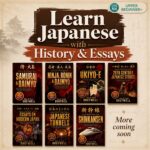


This is the first half of 戦国時代の武将 (The Warrior Leaders of the Warring States Era), the first essay in Learn Japanese with History and Essays, Volume 1: Samurai and Daimyo. Three men ended a century of civil war and unified Japan, and Japanese people still tell them apart with one old joke: what would each of them do with a cuckoo that refuses to sing?
The Japanese is real essay prose for upper beginners and intermediate learners, around JLPT N4 to N3. Every kanji has furigana, and every line has Yumi's native audio.
戦国時代の武将
Words and notes
- 戦国時代the Warring States period (about 1467 to 1568)N2戦 (war) + 国 (country) + 時代 (era)
- のof; belonging toN4descriptive: links 戦国時代 to 武将: "of the Warring States era"
- 武将military commander; warrior leader; generalN1武 (military) + 将 (commander)
English
The warrior leaders of the Warring States era
「鳴かぬなら殺してしまえ。ホトトギス」
Words and notes
- 鳴かぬならif (it) does not singN4「ぬ」= old-fashioned negative (modern 「ない」); 「なら」= if. Together: "if it won't sing"
- 殺してしまえjust kill it (command)N3て-form + しまえ (command of しまう): "go ahead and kill it": blunt, final tone
- ホトトギスlesser cuckoo (a songbird)
None of the three warlords actually wrote these verses. They were made up much later, in the 江戸時代, to sum up each man's reputation in a single line.
English
"If it won't sing, kill it. The cuckoo."
これは、戦国時代の武将織田信長を表す句です。
Words and notes
- これはthis; this oneN5は sets 「これ」 as the topic: refers to the preceding haiku
- 戦国時代the Warring States period (about 1467 to 1568)N2戦 (war) + 国 (country) + 時代 (era)
- のof; 'sN4links 「戦国時代」 to 「武将」: warlord of that era
- 武将military commander; warrior leader; generalN1武 (military) + 将 (general)
- 織田信長Oda Nobunagain apposition to 「武将」: names the specific warlord
- をobject markerN5makes 「織田信長」 the object of 「表す」
- 表すto represent; to expressN3modifies 「句」: the haiku that portrays Nobunaga
- 句ですphrase; verse; haikuN2です closes the sentence: "is a verse"
English
This is a verse that portrays Oda Nobunaga, a warrior leader of the Warring States period.
織田信長は、戦国時代、たくさんの戦に勝ち、日本のほとんどを支配下に置いた大名です。
Words and notes
- 織田信長Oda Nobunaga
- はtopic markerN5sets 織田信長 as the topic: "as for Nobunaga…"
- 戦国時代the Warring States period (about 1467 to 1568)N2戦 (war) + 国 (country) + 時代 (era)
- たくさんのa lot; manyN5の links たくさん to the following noun 「戦」
- 戦war; battleN2read 「いくさ」 here (battle), not せん
- にat; in; toN5marks 「戦」 as what he won at: pairs with 「勝つ」
- 勝ちwinning (and)N5ます-stem used to connect clauses: "won… and…"
- 日本JapanN5
- のof; 'sN4possessive: 「日本」's most part
- ほとんどmost; almost allN3here a noun: "most of Japan"
- をobject markerN5makes 「ほとんど」 the object of 「置く」
- 支配下under one's control; under dominationN1支配 (control) + 下 (under)
- 置いたplaced; putN4plain past; 「支配下に置く」 = "put under control"
- 大名daimyo; feudal lordN2大 (great) + 名 (from 名田, privately held land); a powerful territorial lord
- ですcopula; to beN5closes the sentence: "is a daimyo who…"
English
Oda Nobunaga was a daimyo who won many battles during the Warring States period and brought most of Japan under his control.
天下統一まであと一息という時に、京都で自分の家臣、明智光秀に殺されます。
Words and notes
- 天下統一unification of the countryN1天下 (the realm) + 統一 (unification)
- までuntil; up toN5marks 「天下統一」 as the end-point being approached
- あとafter; later; restN5"just one more…": how much is left
- 一息one breath; a short rest; a small effort; the final pushN2「あと一息」= idiom "just one final push away"
- というcalled; known as; meaning; thatN3links the preceding description to 「時」
- 時にtime; hour; momentN5に marks 「時」 as the moment when the event happens
- 京都でKyoto (city, prefecture)で marks 京都 as where the killing happened
- 自分のoneself; selfN4possessive: refers back to Nobunaga: "his own"
- 家臣vassal; retainerN1家 (house) + 臣 (retainer)
- 明智光秀Akechi Mitsuhidethe vassal who betrayed Nobunaga; renames the preceding 「家臣」
- にby (agent)N5marks 明智光秀 as the one who did the killing (passive agent)
- 殺されますis killed / gets killedN3polite passive of 殺す: "is killed"; historical present adds vividness
English
Just when he was one final step away from unifying the whole country, he was killed in Kyoto by his own vassal, Akechi Mitsuhide.
この句から分かるように、役に立たないなら殺してしまって良いとする、大変残虐で、短気な人であったと言われています。
Words and notes
- このthis [demonstrative pronoun]N5points to the haiku just quoted
- 句phrase; verse; haikuN2refers to the poem attributed to Nobunaga
- からfrom; based onN5marks 「句」as the source you understand from
- 分かるようにas (you) can understandN4「~ように」= "as/just as"; sets up "as this poem shows"
- 役に立たないis not usefulN4set phrase; negative plain form: "not useful"
- ならif; in the case thatN4conditional: "if (it's) not useful…"
- 殺してしまってkill (with finality)N3て-form of 殺す + しまう (do completely/regrettably)
- 良いgood; okay; mayN5here "it's fine (to)": permission after てしまって
- とするto hold that; to regard (something) asN3「~とする」wraps the preceding thought as his attitude: "one who holds that…"
- 大変tough; difficult; very (adverb)N4intensifies the following adjective
- 残虐でcruel and (linking)N1残 (cruel) + 虐 (torment); で links to next adjective
- 短気なshort-tempered; impatientN2短 (short) + 気 (temper); な modifies 人
- 人personN5
- であったwasN3past of the written copula である; spoken equivalent だった
- とthat (quotative)N4quotes the whole description before 言われています
- 言われていますit is said (that)N5passive + ている: "it is said that…"
English
As you can tell from this poem, he is said to have been an extremely cruel and short-tempered man who held that if something was useless, it was fine to simply kill it.
織田信長の後、日本を支配したのは、豊臣秀吉です。
Words and notes
- 織田信長Oda Nobunaga
- のof; 'sN4links 織田信長 to 「後」: "after Nobunaga"
- 後later; afterN4
- 日本をJapanN5を makes 日本 the object of 「支配した」
- 支配したのはthe one who ruledN2plain past + の turns the clause into a noun ("the one who ruled"); は sets it as topic. 支 (branch; support) + 配 (distribute)
- 豊臣秀吉Toyotomi Hideyoshi (a historical figure)
- ですcopula; to beN5the polite "is" word answering "who ruled?"
English
After Oda Nobunaga, the one who ruled Japan was Toyotomi Hideyoshi.
織田信長の死後、明智光秀を倒し、天下人となりました。
Words and notes
- 織田信長のOda Nobunagaの links to 死後: "after Nobunaga's death"
- 死後after death; posthumouslyN2死 (death) + 後 (after)
- 明智光秀をAkechi Mitsuhideを makes 明智光秀 the object of 倒し
- 倒しdefeated (and)N3ます-stem used to connect clauses: "defeated…, and…"
- 天下人ruler of the country; person who holds power over the nationN1天下 (the realm) + 人 (person)
- となりましたbecameN4と marks the result of なる: "became 天下人"
English
After Oda Nobunaga's death, he defeated Akechi Mitsuhide and became the ruler of the realm.
「鳴かぬなら、鳴かせてみよう。ホトトギス」
Words and notes
- 鳴かぬならif it does not singN4old-fashioned negative ぬ + なら: “if it does not …”
- 鳴かせてmaking it sing; causing it to singN3て-form leading into みよう
- みようlet me try; let us tryN4volitional after て-form: “try to …”
- ホトトギスlesser cuckoo (a songbird)placed at the end, naming the bird the verse is about
English
"If it won't sing, I'll try to make it sing. The cuckoo."
これは、豊臣秀吉を表す句です。
Words and notes
- これはthis; this oneN5sets 「これ」 (the haiku just quoted) as the topic
- 豊臣秀吉をToyotomi Hideyoshi (a historical figure)を makes 「豊臣秀吉」 the object of 「表す」
- 表すto represent; to expressN3plain form modifying 「句」: "a haiku that represents…"
- 句phrase; verse; haikuN2here means the haiku poem quoted just above
- ですcopula; to beN5polite "is" closing the sentence
English
This is a haiku that represents Toyotomi Hideyoshi.
秀吉はもともと「木下藤吉郎」という名で、農家の出身でした。
Words and notes
- 秀吉Hideyoshi (a historical figure)
- はtopic markerN5sets 秀吉 as the topic: "as for Hideyoshi…"
- もともとoriginally; from the startN3
- 「木下藤吉郎」Kinoshita Tokichiro, Hideyoshi's early nameHideyoshi's original name before he rose to power
- というcalled; known as; meaning; thatN3links the name to 名: "a name called…"
- 名でnameN5で here links this clause to the next: "went by the name…, and"
- 農家farmer; farm householdN3農 (farming) + 家 (house/family)
- のof; from (associative)N4links 農家 to 出身: "origins from a farming family"
- 出身one's origin (e.g. city, country, parentage, school)N4出 (come out) + 身 (body/person)
- でしたwasN5polite past of です
English
Hideyoshi was originally called "Kinoshita Tokichiro," and he came from a farming family.
出世したいと織田信長の家臣になりますが、はじめは「足軽」と呼ばれる一番位の低い兵隊でした。
Words and notes
- 出世したいwanting to get ahead in lifeN2ます-stem + たい = want to; 出 (go out) + 世 (world)
- とthat (quotation); with the intention thatN4quotes the wish 「出世したい」 as the reason for the next verb
- 織田信長Oda Nobunaga
- の's (possessive)N4possessive: 織田信長's 家臣
- 家臣vassal; retainerN1家 (house) + 臣 (subject/retainer)
- になりますbecomes / becameN4に marks 家臣 as what he becomes; historical present tense
- がbut; howeverN4connects the two clauses with a contrast: 'became a vassal, but…'
- はじめはbeginning; startN5written in kana here; は marks 「はじめ」 as the topic: 'as for the start…'
- 「足軽」foot soldier; the lowest-ranking soldier足 (foot) + 軽 (light): lightly-equipped infantry
- 呼ばれるto be calledN4passive of 呼ぶ; describes 「兵隊」: a soldier called 足軽
- 一番number one; first; first placeN5makes the following 「位の低い」 superlative: 'the lowest'
- 位rank; statusN2
- 低いlowN4modifies 「兵隊」: a soldier whose rank is low
- 兵隊soldierN2兵 (soldier) + 隊 (unit/troop)
- でしたwasN5polite past 'was': he was the lowest-ranking soldier
English
Wanting to rise in the world, he became one of Oda Nobunaga's retainers, but at first he was a soldier of the lowest rank of all, the kind called 足軽 (foot soldier).
雑用などなんでもこなさなければいけないところから始まりましたが、
Words and notes
- 雑用chores; odd jobs; miscellaneous tasksN1雑 (miscellaneous) + 用 (task)
- などand so on; things likeN5"things like 雑用": gives an example
- なんでもany; anything; whateverN4"anything and everything"
- こなさなければいけないhad to handle / manageN2negative + なければいけない = "must handle"
- ところからplace; spot; pointN5ところ = the stage/point; から = starting from
- 始まりましたがbegan, but…N4polite past of 始まる; が = "but…": the sentence continues in the next line
English
He started out in a position where he had to handle anything and everything, odd jobs included, but…
どうやったら殿様に気に入られるか、工夫をしたり、思いがけない作戦を練ったりするので、織田信長に気に入られ、どんどん出世していきました。
Words and notes
- どうやったらhow (can one)…; in what wayN3"how to": sets up the indirect question ending in か
- 殿様にfeudal lord; daimyoN2殿 (lord) + 様 (honorific); に marks the one who likes him
- 気に入られるかhow to be likedN4passive of 気に入る + か marking the embedded question
- 工夫をingenuity; devising; clever effortN2工 (craft) + 夫 (labor); を marks it as object of する below
- したりdoing (among other things)N5たり-form: lists this action alongside 練ったり
- 思いがけないunexpected; surprisingN2modifies 作戦: "unexpected strategies"
- 作戦をstrategy; tactics; planN2作 (make) + 戦 (battle); を marks object of 練る
- 練ったりworking out (among other things)N2たり-form paired with したり: "doing X, working out Y, etc."
- するのでbecause (he) doesN5ので gives the reason: "because he did such things…"
- 織田信長にOda Nobunagaに marks Nobunaga as the one who liked him
- 気に入られwas liked / being likedN4passive stem-form connecting to the next clause
- どんどんrapidly; steadilyN3
- 出世していきましたkept rising in rankN2出 (go out) + 世 (world); ていく shows a change that kept unfolding over time
English
Because he was always devising clever ideas and working out unexpected strategies for how to win the lord's favor, he came to be liked by Oda Nobunaga and steadily rose in rank.
What has happened so far
The essay opens with a verse: "If it won't sing, kill it. The cuckoo." This verse portrays Oda Nobunaga, a warrior leader of the Warring States period. Nobunaga won many battles and became the daimyo who brought most of Japan under his control. But just when he was one breath away from unifying the country, he was killed in Kyoto by his own retainer, Akechi Mitsuhide. As the verse shows, he is said to have been a very cruel, short-tempered man, one who held that anything useless could simply be killed.
After Nobunaga, the man who ruled Japan was Toyotomi Hideyoshi. After Nobunaga's death he defeated Akechi Mitsuhide and became ruler of the realm. His verse is "If it won't sing, I'll try to make it sing. The cuckoo." Hideyoshi was born into a farming family and was first called Kinoshita Tokichiro. Wanting to rise in the world, he became one of Nobunaga's retainers, but he started as a foot soldier, the lowest rank of all, doing whatever odd jobs came his way. He kept working out how to win his lord's favor, trying new ideas and dreaming up unexpected plans, and so Nobunaga came to like him, and he rose quickly through the ranks.
What happens next
One cold morning, Nobunaga is about to go out, and his straw sandals are nowhere to be found. Setting them out is Hideyoshi's job. "Hey, Monkey, my sandals aren't here!" Nobunaga says angrily, and what Hideyoshi does next is one of the most famous stories in Japan.
Then comes the third warlord, the one who outlived the other two and whose family ruled Japan for more than two hundred years, with the third cuckoo verse. What would he do with a bird that will not sing? The answer, and the rest of the essay, are in the book, along with two more: Sakamoto Ryoma, the low-ranking samurai who helped end the shogunate, and Miyamoto Musashi, Japan's most famous swordsman.
Finish the essay. Learn Japanese with History and Essays is our set of Japanese readers built from true stories of Japanese history and modern life: 7 books and 21 stories and essays, with furigana on every kanji, native audio at normal and slow speed, line-by-line vocabulary and grammar notes, a full English translation, Review and Practice exercises, and Anki decks. Every story also opens in the free Makoto Japanese Explorer app, where you can tap any word for its reading and meaning.
Essay text from Learn Japanese with History and Essays, Volume 1 by Clay and Yumi Boutwell. Audio read by Yumi Boutwell.