

Japanese has two ways to turn a verb into a noun, こと and の, and learners are usually told they mean the same thing. Most of the time they do. Then one day you write 日本語を話すのができます, and a teacher crosses it out without being able to say why. There is a why, and it fits in one question: is this an idea, or is it happening in front of you?
Every example sentence has audio, and its English is blurred on purpose. Read the Japanese first, then tap the blur to check yourself.
Here is the whole lesson in one verb, four ways:
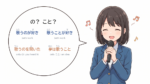
歌うのが好き ・ 歌うことが好き ・ 歌うのを聞いた ・ 夢は歌うことI like singing. I like singing. I heard her sing. My dream is to sing. The first two mean the same and either word works. The third is something your ears caught as it happened, so only の works. The fourth is an idea in your head, so only こと works.
Why These Two Get Confused
Because they do the same job. Add こと or の after the plain form of a verb and you get a noun: 歌うこと and 歌うの are both “singing”, and either can take が, を or は after it.
The difference is in what kind of noun you made. の makes the event itself, the thing actually going on. こと makes the act as an idea, something you can name, plan or be able to do. Where you are only giving an opinion about the activity, like “is fun” or “is hard”, the line blurs and either works.
Before you choose, ask: is this an idea, or is it happening in front of you? If you see it, hear it, wait for it or help with it, use の. If you can do it, have done it, decide on it, or say “my dream is…”, use こと. If you are just saying how you feel about it, either one is fine.
The Two at a Glance
| Which word | What it makes | Goes with | Example |
|---|---|---|---|
| の only | The event itself | 見る・聞く・見える・聞こえる・待つ・手伝う, and ~のは when pointing at a place, person or time | 彼女が歌うのを聞きました。I heard her sing. |
| Either | The activity, with an opinion attached | 好き・嫌い・苦手・楽しい・難しい・大切 | 歌を歌うのが好きです。I like singing. |
| こと only | The act as an idea | ことができる・ことがある・ことにする・ことになる・Xは~ことです, and verbs of telling | 私の夢は歌手になることです。My dream is to become a singer. |

The whole lesson on one card.
One Verb, Three Sentences
歌を歌うのが好きです。
[好き is an opinion about the activity, so either word works. 歌うことが好き is just as correct, and a shade more written.]
彼女が歌うのを聞きました。
[Your ears caught the singing as it happened, so it must be の. With こと it would mean you were told that she sings.]
私の夢は歌手になることです。
[A dream is an idea, and “my dream is…” is a definition. Only こと can finish a sentence like this one.]
どちらもWhere Either One Works
When the sentence gives an opinion about an activity, the line between event and idea is too thin to matter. 好き (like), 嫌い (dislike), 苦手 (bad at), 楽しい (fun), 難しい (difficult) and 大切 (important) all take either word. の is more common in conversation, こと in writing.
日本語を話すのは楽しいです。
[An opinion about the activity, said the way a friend would say it. 話すことは楽しい would be just as correct, and a little more formal.]
のOnly の: Something Happening
You cannot see or hear an idea, and you cannot wait for one or help with one. So 見る, 見える, 聞く, 聞こえる, 感じる, 待つ and 手伝う take only の. So does ~のは when it points at a person, place or time.
子どもたちが公園で遊んでいるのが見えます。
[What you see is the playing itself, going on right now. 見える takes が, so it is のが.]
友達が来るのを待っています。
[You are waiting for an arrival, a real event at the station. 待つ takes を, so it is のを.]
私が生まれたのは大阪です。
[Here の stands in for “the place”, and the sentence points at Osaka as the answer. This pointing ~のは never takes こと.]
ことOnly こと: An Idea
こと is the word for an act you can name, own, plan or talk about, and it is built into some of the most useful patterns in Japanese: ことができる (can do), ことがある (have done), ことにする (decide to), ことになる (it has been decided that), “my hobby is…”, and verbs of telling. In every one of them, の is wrong.
私の趣味は写真を撮ることです。
[A hobby is defined, not watched. “My X is to do Y” always ends in ことです.]
ピアノを弾くことができます。
[ことができる is a fixed pattern: an ability is an idea you own, whether or not you are playing right now.]
来年、日本に留学することにしました。
[ことにする means “decide to”. What you decide on is a plan, and a plan lives in your head.]
Using Them Together
友達がピアノを弾くのを聞いて、私も習うことにしました。
[The whole lesson in one breath. You heard the playing, so の. You decided on learning, so こと.]
Three Sentences Worth Getting Wrong Once
1. こと with a verb of seeing
✗ 電車が来ることが見えました。 You cannot see an idea, and eyes do not take in “the fact that a train is coming”.
電車が来るのが見えました。 (I could see the train coming.) The train is right there, moving. That is の.
2. の at the end of “my dream is…”
✗ 私の夢は医者になるのです。 With の, this turns into the explaining のです: “it’s that I’ll become a doctor”, answering a question nobody asked.
私の夢は医者になることです。 (My dream is to become a doctor.) The same rule covers 趣味は, 仕事は and 目標は (my goal is).
3. のができる
✗ 日本語を話すのができます。 The mistake that gives away a learner more than any other. ことができる is a fixed pattern.
日本語を話すことができます。 (I can speak Japanese.) Or use the potential form: 日本語が話せます.
Quick Self-Check
Pick the ending. Answers below.
- 子どもたちが歌っている__聞こえます。 (ことが ・ のを ・ のが ・ ことを)I can hear the children singing.
- 私の趣味は切手を集める__です。 (こと ・ の ・ もの ・ ところ)My hobby is collecting stamps.
- 来年から東京で働く__なりました。 (のに ・ ことに ・ のが ・ ことが)It’s been decided that I’ll work in Tokyo from next year.
- 駅で友達が来る__待っています。 (のを ・ ことを ・ のが ・ ことが)I’m waiting at the station for my friend to come.
Answers. 1. のが, because you hear an event happening, and 聞こえる takes が. 2. こと, because “my hobby is…” is a definition. 3. ことに, because ことになる is the fixed pattern for a decision made for you. 4. のを, because you wait for something to happen, and 待つ takes を.
If you remember one thing, make it this: の is something happening, こと is an idea. You see and hear with の, and you can, have, decide and dream with こと. When you are only saying how you feel about an activity, either one is fine.
For more on こと on its own, see our lessons on using こと in Japanese and ことができる.

Samurai and Shogun Makoto+ members get the full deep dive on こと and の:
- Four to six examples for each group instead of one to three, plus the verbs where both words are right and mean different things, and how to attach each to a noun or an adjective
- Audio on all 26 example sentences
- An interactive quiz that tells you why each answer is right or wrong, including the tempting ones
- A printable two-page reference and practice sheet to download
- A new grammar deep dive every week
Not yet a member? Let’s fix that
Already a Samurai or Shogun member? Click here for the in-depth lesson and the download.