For upper beginners to intermediates. Listen to the short podcast and then answer the comprehension questions below.
日本のお風呂
Japanese Bath
New episode of Nihongo no Tane. Yumi returns to a freezing Japan after a family loss and finds warmth in tradition—old houses, cold mornings, and the simple joy of a hot bath. A cozy reflection on hardship, culture, and comfort. ❄️🛁 #LearnJapanese
Click to Tweet
- はや — "Already; soon." Often implies that time has passed quickly. In the phrase はや3週間, it intensifies the feeling of how fast those three weeks went by. Common in conversational and narrative contexts.
- 相続 — "Inheritance." 相 means "mutual" or "together," and 続 means "to continue." Refers to the process of passing assets or rights from the deceased to their heirs.
- 手続きなど — "Procedures and such." 手続き means "procedure" or "formalities" (手 = hand, 続き = continuation). The など ("etc.") softens the statement and implies that other tasks were also involved.
- ドタバタしていて — "Being hectic or frantic." ドタバタ is onomatopoeic, evoking loud, busy movement. していて is the て-form of する + the progressive いる, showing an ongoing hectic state.
- 追われているような — "As if being chased." 追われている is the passive progressive form of 追う ("to chase"), indicating "being chased." ような compares the speaker’s situation to that of someone being chased.
- 断熱材 — "Insulation material." 断 = to block/cut off, 熱 = heat, 材 = material. Used to describe materials that prevent the transfer of heat in buildings.
- ほぼ — "Almost; nearly." An adverb used to express approximation, indicating that two things are nearly the same (e.g., temperatures inside and outside the house).
- 襲われる — "To be struck; attacked." Passive form of 襲う ("to attack"). Here, used metaphorically to describe the sharp, overwhelming feeling of cold when leaving the futon.
- 着替えなくてはいけません — "Have to change clothes." 着替える = to change clothes. 〜なくてはいけません is a grammatical structure meaning "must" or "have to." Expresses necessity or obligation.
- 燃料代 — "Fuel cost." 燃料 = fuel, and 代 = fee or cost. Together, refers to the expense of heating fuel.
- 電気代 — "Electricity bill." 電気 = electricity, 代 = cost. Common compound used to refer to household electricity expenses.
- 非常に — "Extremely; very." A formal adverb often used in written or polite speech to emphasize intensity.
- ままならず — "Unable to; not going as desired." Classical negative form of ままなる ("to go as intended"). This structure implies a frustrating lack of control, often due to circumstances.
- 唯一 — "Only; sole." A compound meaning "one" (唯) and "exist" (一), used to describe something that is one-of-a-kind or exclusive.
- 幸い — "Fortunately; luckily." Can function as both a noun and an adverb. Formal or literary in tone; expresses relief or unexpected fortune.
- ゆったり — "Leisurely; relaxed." An adverb describing a calm, spacious, and unhurried manner—often used for comfort or space, such as in a bath.
- 伸ばして — "Stretching out." 伸ばす = to stretch or extend. The て-form (伸ばして) is used here to connect to the next verb 浸かる ("to soak").
- 浸かる — "To soak; to immerse." Often used for soaking in water (like in a bath). The verb implies full bodily immersion and comfort.
- 野生の猿 — "Wild monkeys." 野生 = "wild," and 猿 = "monkey." Describes animals living naturally in the wild, untouched by domestication.
- 気持ちよさそうな — "Looks pleasant/comfortable." 気持ち = feeling, よい = good, よさそう = seems good. The full phrase is the adjective form used to describe something that appears to feel good.
- 済ます — "To get by with; to finish." The verb 済ます means "to complete" or "to manage with." In context, it implies using only a shower instead of a bath, often out of convenience.
- 銭湯 — "Public bathhouse." 銭 = money/coin, 湯 = hot water. A traditional, inexpensive facility where people go to bathe.
- 湯船 — "Bathtub." 湯 = hot water, 船 = boat. Refers to the tub where one soaks, often large and communal in a public bathhouse.
- ジャグジー — "Jacuzzi." Loanword from English, referring to a whirlpool bath with jets.
- 露天風呂 — "Open-air bath." 露天 = under the open sky, 風呂 = bath. Typically found in traditional inns or onsen; known for their scenic and relaxing atmosphere.
- ぽかぽか — "Nice and warm." Onomatopoeic expression describing the sensation of pleasant warmth, usually used for body temperature.
- 温まる — "To warm up." Intransitive verb meaning "to become warm." Often used for things like the body or a room getting warm.
- 理想 — "Ideal." Commonly used to describe a perfect vision or aspiration, especially in phrases like 理想の家 ("dream house") or 理想の生活 ("ideal life").
Can you answer these questions?
Want more?
Members have access to over a hundred podcasts with bonus content.
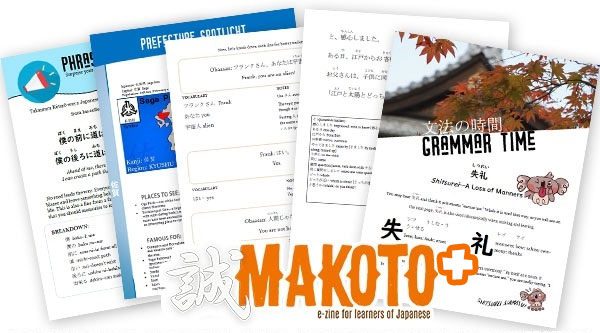
If you are a Makoto+ member, please click here for all the podcasts plus bonus content. Not a Makoto+ member? Please consider supporting us by becoming a member. You will get instant access to ALL podcast transcripts as well as the latest Makoto e-zine issue, shadowing sentences, haiku lessons, Japanese tongue twisters, and much more.
Makoto+ Members Get More
FREE FOR ALL - Limited to the latest 20 episodes
Member Bonus Content - All Episodes
- All the above plus
- Download a PDF transcript of the podcast with English and the Japanese
- View the transcript online and mouse over kanji to view furigana
- Download the MP3 ad-free version
- Occasional extra special bonus features such as Anki decks with sound for the main vocabulary
- Access ALL episodes and with bonus content