For upper beginners to intermediates. Listen to the short podcast and then answer the comprehension questions below.
ラジオ番組
Radio Show
New episode of Nihongo no Tane! 🎙️ Trapped in a snowy, bookless house with no Wi-Fi, Yumi finds joy in an unexpected place—a hilarious Japanese radio show. A cozy episode about boredom, giggles, and rediscovering the joy of stories. 📻❄️ #LearnJapanese
Click to Tweet
- 刑務所 — "Prison." 刑 means "punishment" or "penalty," and 務所 means "workplace" or "institution." Together, this refers to a penal institution where people serve criminal sentences.
- 大げさ — "Exaggerated; over the top." This word is used to describe something overly dramatic or blown out of proportion. Often used to modestly admit to possible exaggeration, as in "maybe I’m exaggerating."
- ローカル局 — "Local TV/radio station." ローカル means "local" (borrowed from English), and 局 means "bureau" or "station." Together, it refers to a regional broadcasting station.
- 映る — "To be reflected; to be broadcast." This verb often refers to something being visible on a screen or being shown on TV. In this context, it means "to be shown (on TV)."
- 高齢 — "Elderly; advanced in age." A formal term used to describe older individuals. Common in written and official contexts.
- どういうわけか — "For some reason." A phrase used when the reason is unknown or unclear. It adds an air of mystery or puzzlement.
- 契約以上 — "Beyond the contract limit." 契約 means "contract" or "agreement," and 以上 means "more than" or "beyond." Used when referring to exceeding agreed terms, such as data usage limits.
- 節約 — "Saving; economizing." Often refers to cutting expenses or conserving resources. Used commonly in household and budget discussions.
- 放送局 — "Broadcasting station." 放送 means "broadcast," and 局 is "bureau/station." This refers to a television or radio network office or station.
- 日曜天国 — "Sunday Heaven." The title of a radio program. 日曜 means "Sunday," and 天国 means "heaven" or "paradise." Together it conveys a cheerful, relaxing Sunday-themed show.
- 一部分 — "A part; a portion." 一部 means "one part," and 分 also means "portion" or "segment." Emphasizes that only a partial section of something is being referred to.
- クスクス — "Chuckle." An onomatopoeia representing soft, suppressed laughter, like giggling to oneself.
- ゲラゲラ — "Loud laughter." Another onomatopoeia, this time representing uninhibited, hearty laughter.
- リスナーさん — "Listener (polite)." リスナー is a borrowed word meaning "listener," and さん adds a polite and respectful tone.
- おハガキ — "Letter/postcard (from a listener)." ハガキ means postcard, and お is an honorific prefix used to show politeness or respect toward the sender.
- 一言 — "One remark; a few words." Literally “one word,” but used to mean a short statement or comment.
- 帰ってくるなり — "As soon as (someone) gets home." 帰ってくる is "to come back home," and なり expresses an immediate sequence — something happened immediately upon return.
- 恐竜 — "Dinosaur."
- 体験談 — "Personal story or experience." 体験 means "experience," and 談 means "story or talk." Together, it refers to a shared anecdote or testimony.
- いたんだよって — "They were there, you know?" いた is the past form of いる (to exist, for living things), んだ emphasizes explanation, よ adds assertion, and って is quoting a statement.
- 自身 — "Oneself; self." Often used to emphasize the subject personally, as in “his own experience.”
- 地元 — "Local; hometown." Refers to one’s home area or region.
- 案外人 — "Surprisingly, people..." 案外 means "unexpectedly" or "surprisingly," and 人 here refers to people. Often used to express that people may react in a way that’s not expected.
- 癒すもの — "Something that heals." 癒す means "to heal" or "soothe," and もの ("thing") indicates the object that performs the action.
- 気取りで — "With the air of; acting like." 気取り means "pretension" or "affectation," and で indicates the manner in which something is done — in this case, acting as if one were an announcer.
Can you answer these questions?
Want more?
Members have access to over a hundred podcasts with bonus content.
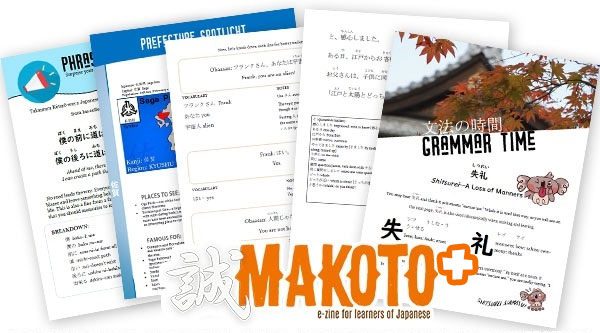
If you are a Makoto+ member, please click here for all the podcasts plus bonus content. Not a Makoto+ member? Please consider supporting us by becoming a member. You will get instant access to ALL podcast transcripts as well as the latest Makoto e-zine issue, shadowing sentences, haiku lessons, Japanese tongue twisters, and much more.
Makoto+ Members Get More
FREE FOR ALL - Limited to the latest 20 episodes
Member Bonus Content - All Episodes
- All the above plus
- Download a PDF transcript of the podcast with English and the Japanese
- View the transcript online and mouse over kanji to view furigana
- Download the MP3 ad-free version
- Occasional extra special bonus features such as Anki decks with sound for the main vocabulary
- Access ALL episodes and with bonus content