


In today’s lesson, let’s look at a few word pairs that are easily confused in Japanese. The biggest one… is cute versus scary!
かわいい (Kanji: 可愛い) Cute; adorable; charming; pretty

Usage: Often used to describe something or someone as endearing or aesthetically pleasing.
Example:
あの子犬はとてもかわいい。
The puppy is very cute.
Vocabulary
こわい (Kanji: 怖い) Scary; frightening; dreadful

Usage: Used to describe something or someone as fear-inducing or intimidating.
Example:
その映画はとてもこわい。
That movie is very scary.
Vocabulary
Want to print this lesson and then take a quiz?
Makoto+ Members, click here to download all the sound files and a printable PDF just for this lesson. It also has an interactive quiz to test your knowledge. Practice makes perfect!
Listen Carefully to the Difference:
When I (Clay) first arrived in Japan in the late 1990s, a fellow American friend shared a frighteningly funny experience he’d had with a Japanese coworker’s newborn baby. Eager to use the little Japanese he had picked up, he confidently tried to say something like “how cute.” Unfortunately, his attempt backfired when the coworker snapped, “It’s かわいい, not こわい!”
Here’s the Ninja Penguin making the same mistake:
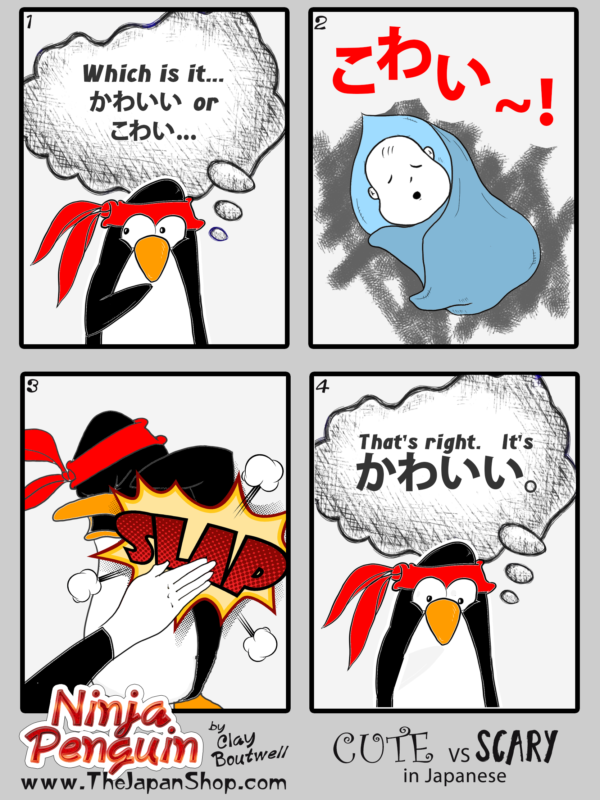
To the Japanese ear, these two words—かわいい and こわい—are as different as kittens and chainsaws. But for English speakers, the sounds can blur together.
🎧 Train Your Ears!
The key is in the details:
- Cute is かわいい. Pay attention to the “か” sound and the longer “い” sound.
- Scary is こわい. Notice the "こ" sound and the short "い" sound.
👂 Try saying both out loud a few times. Imagine telling someone their baby is “scary” when you meant “adorable.” (See above.)
Additional Example for かわいい

その猫はかわいいですね。
That cat is cute, isn’t it?
Vocabulary
Additional Example for こわい

彼の話はこわかった。
His story was scary.
Vocabulary
Another Tricky Pair:
座る
To sit – Notice it starts with a す
触る
To touch – Notice it starts with a さ
Example:
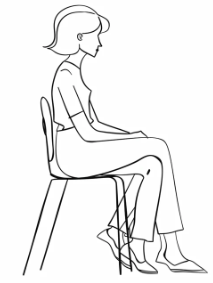
座ってください。
Please sit down.
Vocabulary
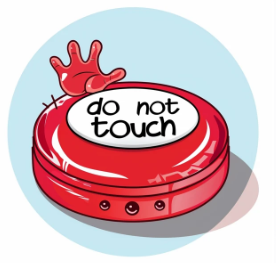
このボタンに触らないでください。
Please don’t touch this button.
Vocabulary
おまけ!EXTRA!
One More Potentially Confusing Word Pairing:
おしり
(Kanji: お尻): Buttocks
押し入れ
Closet
Listen to These Closely:
**Warning**: Be careful with the following
Example
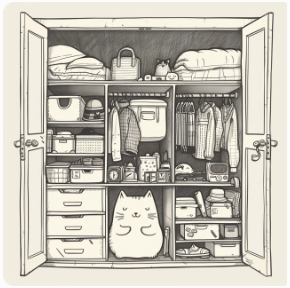
あなたの押し入れはとても大きいですね。
Meaning: Your closet is very big!
Misinterpretation: Could sound like "Your butt is very big!"
Vocabulary
By paying close attention to the pronunciation and context, you can avoid these common pitfalls and use the correct word every time.
If you are a Makoto+ member, please download the bonus files and take the interactive quiz to test your knowledge!
Makoto+ Members, click here to download all the sound files and a printable PDF just for this lesson. It also has an interactive quiz to test your knowledge. Practice makes perfect!