


 Learn Japanese through Dialogues: At the Restaurant
DIALOGUE ONE: Making Reservations
In this article, we will look at a typical restaurant reservations scenario. Listen to the dialogue while going through the text, spend some time going through the grammar notes, and then listen to it once more–this time, hopefully, with greater comprehension.
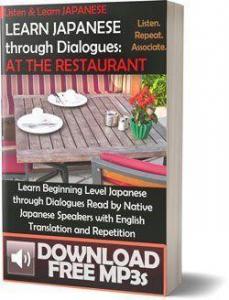
If you like this lesson, check out our Learn Japanese through Dialogues series of eBooks (or paperback) + MP3s. This particular dialogue is from the book “At the Restaurant” as seen to the left. See the bottom of a way to get four of these eBooks, each with eight or more dialogues, for the price of one eBook.
Let’s begin today’s lesson…
Dialogue One: in Japanese
Making Reservations
 あの、すみませんが、今夜8時に予約をしたいのですが。
ano, sumimasen ga, konya hachi ji ni yoyaku wo shitai no desu ga.
Hello. I would like to make a reservation for tonight at eight.
[su_spoiler title=”Grammatical Notes” open=”no” style=”fancy” icon=”arrow”]
ano—um; “sumimasen ga” would mean “Sorry for the trouble but ~”—it is something you would say to be polite before making a request.
VOCABULARY
あの ano umm [said as a polite way to get someone’s attention]
すみません sumimasen sorry; excuse me
が ga but; however
今夜 konya tonight
8時に hachi ji ni at 8 o’clock
予約 yoyaku reservation
を wo [direct object marker]
したい shitai want to
のですが no desu ga The “no” + “desu” is a sentence ender which indicates the speaker is explaining something. The “ga,” meaning “but” is added to soften the request.
[/su_spoiler]
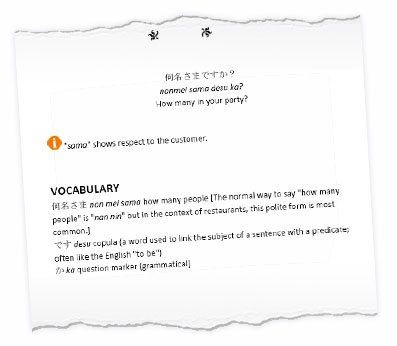
 はい、かしこまりました。何名様ですか?
hai, kashikomarimashita. nanmei sama desu ka?
Sure, how many people will be in your party?
[su_spoiler title=”Grammatical Notes” open=”no” style=”fancy” icon=”arrow”]
“hai, kashikomarimashita” would mean “Yes, I will respectfully obey your request”; this is a standard reply used by servers when they take orders or requests from the customers.
VOCABULARY
はい hai yes
かしこまりました kashikomarimashita I understand; yes [to obey respectively]
何名様 nanmei sama how many people [Normally, you can say, “nan nin” for “how many people,” but in the context of a restaurant, you will hear the very polite, “nan mei sama.”]
です desu copula [a word used to link the subject of a sentence with a predicate; often like the English “to be”]
か ka [question marker][/su_spoiler]
四人です。
yonin desu.
Four.
[su_spoiler title=”Grammatical Notes” open=”no” style=”fancy” icon=”arrow”]
Notice the pronunciation is “yonin” not “yonnin.”
VOCABULARY
四人 yonin four people
[/su_spoiler]
室内のテーブル席になさいますか?それとも、屋外になさいますか?
shitsunai no te-buru seki ni nasaimasu ka? soretomo, okugai ni nasaimasu ka?
Would you like a table inside or would you prefer a seat outside?
[su_spoiler title=”Grammatical Notes” open=”no” style=”fancy” icon=”arrow”]
“seki” is usually “seat” but in this case it is “table”
VOCABULARY
室内 shitsunai inside (the restaurant)
の no [shows possession or relationship between two things]
テーブル te-buru table
席 seki seat
になさいますか? ni nasaimasu ka? will be?
それとも soretomo or
屋外 okugai outside (the restaurant)
になさいますか? ni nasaimasu ka? will be?
[/su_spoiler]
天気がいいので、外がいいと思います。
tenki ga ii node, soto ga ii to omoimasu.
The weather is nice so outside would be great.
[su_spoiler title=”Grammatical Notes” open=”no” style=”fancy” icon=”arrow”]
“~ node” is “because ~” but notice its position in the sentence. It connects and shows a relationship between two phrases.
ii—good; tenki ga ii—fine weather; soto ga ii—the outside is good.
VOCABULARY
天気 tenki weather
が ga [grammar: usually marks the subject of the sentence.]
いい ii good; nice
ので node because; therefore
外 soto outside
と思います to omoimasu I think
[/su_spoiler]
はい、かしこまりました。なにかほかにご希望などはございませんか?
hai, kashikomarimashita. nanika hokani gokibou nado wa gozaimasen ka?
Sure. Is there anything else I can get for you?
[su_spoiler title=”Grammatical Notes” open=”no” style=”fancy” icon=”arrow”]
“gokibou” (“go” + “kibou – hope”) – something you would want; adding the polite “go” shows respect to the customer.
VOCABULARY
はい hai yes
かしこまりました kashikomarimashita I understand; yes
なにか nanika something
ほかに hokani in addition
ご希望 go kibou your wish; your order [the “go” makes it polite when referring to someone else’s wish.]
など nado etc.
は wa [particle topic marker—hiragana “ha” but pronounced “wa“]
ございません gozaimasen there isn’t
か ka question marker [grammatical][/su_spoiler]
はい、あります。私の妻の誕生日ですので、ケーキをテーブルに持ってきてほしいのですが。
hai, arimasu. watashi no tsuma no tanjoubi desu node, ke-ki wo te-buru ni motte kite hoshii no desu ga.
Yes, it is my wife’s birthday and I would like a cake brought to the table.
[su_spoiler title=”Grammatical Notes” open=”no” style=”fancy” icon=”arrow”]
A sentence which ends with “~ desu ga” is a soft way of requesting something instead of making it sound like a direct order.
VOCABULARY
はい hai yes
あります arimasu have; exist
私 watashi I; me (used by males and females]
の no [shows possession or relationship between two things]
妻 tsuma wife
誕生日 tanjoubi birthday
ので node because; therefore
ケーキ ke-ki cake
を wo [direct object marker]
テーブル te-buru table
に ni to (the table)
持ってきて motte kite brought [literally, “hold and come”]
ほしい hoshii want
のですが no desu ga The “no” + “desu” is a sentence ender which indicates the speaker is explaining something. The “ga,” meaning “but” is added to soften the request.
[/su_spoiler]
それは素敵なお考えですね。お食事のあと、ケーキをお持ちいたします。
sore wa suteki na okangae desu ne. o shokuji no ato, ke-ki wo omochi itashimasu.
How nice! Yes, we can have it brought out at the end of your meal.
[su_spoiler title=”Grammatical Notes” open=”no” style=”fancy” icon=”arrow”]
“suteki” means “nice,” “lovely,” or “cool” and is very commonly used.
VOCABULARY
それは sore wa as for that
素敵な suteki na nice; good
お考え o kangae thought
ね ne isn’t it? [a very common and versatile sentence ender]
お食事 o shokuji food
の no [shows possession or relationship between two things]
あと ato after
ケーキ ke-ki cake
を wo [direct object marker]
お持ちいたします o mochi itashimasu will carry out
[/su_spoiler]
いいですね、それと、食後にワインもお願いしたいのですが
ii desu ne, soreto, shokugo ni wain mo onegai shitai no desu ga.
Great! I would also like a bottle of wine after the meal.
[su_spoiler title=”Grammatical Notes” open=”no” style=”fancy” icon=”arrow”]
“soreto” – also; “shokugo 食後 ” – shoku (to eat) + go (after)
VOCABULARY
いい ii good; nice
ね ne isn’t it? [a very common and versatile sentence ender]
それと sore to that and
食後に shokugo ni after eating
ワイン wain wine
も mo also
お願いしたい onegai shitai want to ask a favor [The “shitai” adds the meaning of “to want to…”]
のですが no desu ga The “no” + “desu” is a sentence ender which indicates the speaker is explaining something. The “ga,” meaning “but” is added to soften the request.
[/su_spoiler]
はい、屋外のお席、8時にご予約承りました。
hai, okugai no oseki, hachi ji ni goyoyaku uketamawarimashita.
Okay, your table for four outside will be ready for you at eight o’clock.
[su_spoiler title=”Grammatical Notes” open=”no” style=”fancy” icon=”arrow”]
“uketamawarimashita” is usually used by a restaurant receptionist when confirming an appointment. It means “I have respectfully received (your appointment).”
VOCABULARY
はい hai yes
屋外 okugai outside (the restaurant)
の no [shows possession or relationship between two things]
お席oseki seat [polite]
8時に hachi ji ni at 8 o’clock
ご予約 goyoyaku reservation [polite]
承りました uketamawarimashita received
[/su_spoiler]
ありがとうございます。ワインとケーキは、ウエイトレスが持ってきてくれますね?
arigatou gozaimasu. wain to ke-ki wa, ueitoresu ga motte kite kuremasu ne?
Thank you, and our server will bring out the wine and cake?
[su_spoiler title=”Grammatical Notes” open=”no” style=”fancy” icon=”arrow”]
Adding “ne?” at the end can make the sentence a question by asking for a confirmation.
VOCABULARY
ありがとうございます arigatou gozaimasu thank you
ワイン wain wine
と to and
ケーキ ke-ki cake
ウエイトレス ueitoresu waitress
が ga [grammar: usually marks the subject of the sentence.]
持ってきてくれます motte kite kuremasu will bring
ね ne [sentence ender asking for confirmation][/su_spoiler]
はい、お食事のあと、お持ちいたします。そのほかになにかございますか?
hai, o shokuji no ato, omochi itashimasu. sono hokani nanika gozaimasu ka?
Yes, at the end of your meal. May I help you with anything else?
[su_spoiler title=”Grammatical Notes” open=”no” style=”fancy” icon=”arrow”]
“omochi itashimasu” means “(The server) will bring (them)”
VOCABULARY
はい hai yes
お食事oshokuji food; meal [polite]
の no possession [grammatical]
あと ato after
お持ちいたします omochi itashimasu will bring (to you)
そのほかに sono hoka ni something else
なにか nanika something
ございます gozaimasu is; exists [polite form of desu]
か ka question marker [grammatical][/su_spoiler]
いえ、ありません。以上です。
ie, arimasen. ijou desu.
No, thank you. That will be all.
[su_spoiler title=”Grammatical Notes” open=”no” style=”fancy” icon=”arrow”]
“ijou desu“—that will be all; that is all; that’s it
VOCABULARY
いえ ie no
ありません arimasen isn’t; doesn’t exist
以上 ijou that is all
[/su_spoiler]
ありがとうございました。
arigatou gozaimashita.
Thank you.
[su_spoiler title=”Grammatical Notes” open=”no” style=”fancy” icon=”arrow”]
“arigatou gozaimashita” is more polite than “arigatou” which would not be appropriate here.
VOCABULARY
ありがとう arigatou thank you
ございました gozaimashita past of “gozaimasu” [use the past form to thank for what was done already.]
[/su_spoiler]
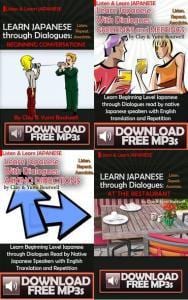
Did you enjoy this lesson? This is the first dialogue from the At the Restaurant eBook. Get that eBook plus Beginning Conversations, Greetings and Meetings, and Asking Directions for only $5.
Get all four Japanese Dialogues study packs for one low price. Separately, these four eBooks (also includes MP3s as well as Kindle, ePub, and PDF versions) would cost $17.96 at Amazon. Click here to lock in this limited time offer now.